
When planning a kitchen remodel, homeowners often assume hiring an interior designer is an unnecessary expense. However, working with a professional designer can save you money in the long run by helping you avoid costly mistakes, make efficient decisions, and maximize your investment. A designer’s expertise goes beyond aesthetics—they bring practical knowledge, industry connections, and project management skills to the table.
If you are looking for a more in-depth and personal discussion with our team regarding your specific project, feel free to book a hassle free, no obligation 1 on 1 virtual consultation with our Construction Consultant: Book a Call.
Here’s an in-depth look at how hiring an interior designer can save you money on your kitchen remodel.
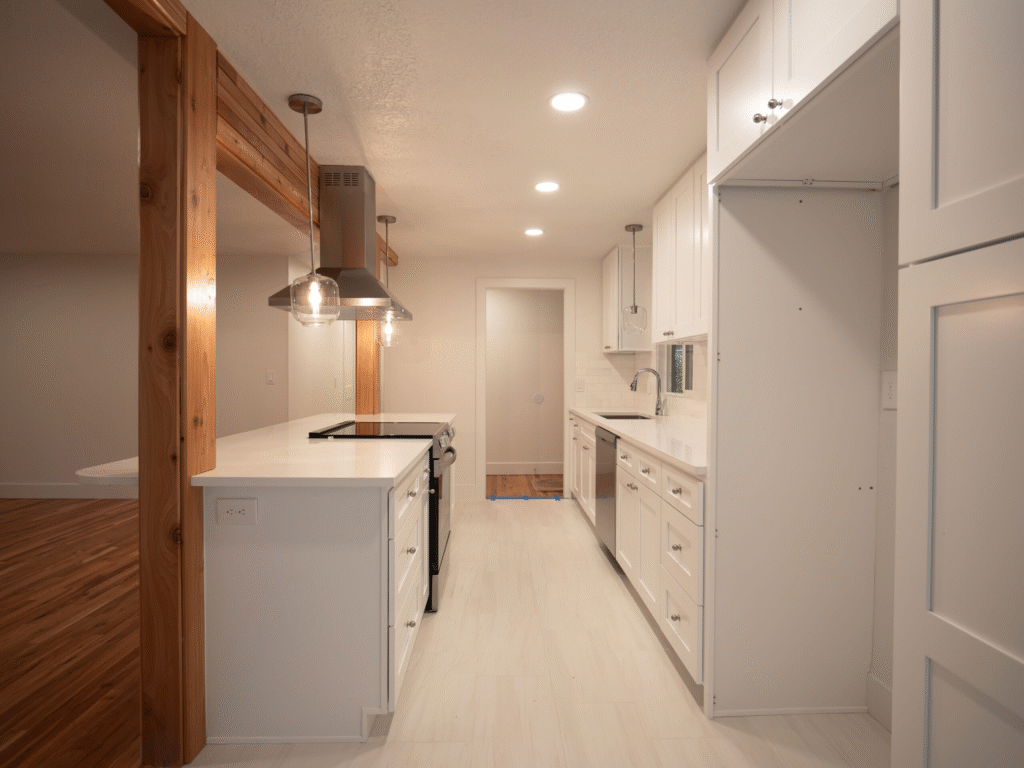
1. Avoid Costly Mistakes
Design Errors
One of the most significant risks in a DIY remodel is poor planning. Misplaced cabinets, awkward layouts, or mismatched finishes can lead to additional expenses for corrections.
- How Designers Help:
Interior designers are skilled at planning functional and visually appealing spaces. They ensure your kitchen layout works efficiently, minimizing wasted space and maximizing utility.
Example:
An Oregon homeowner attempted to DIY their kitchen layout but realized mid-project that their refrigerator doors couldn’t open fully due to a misaligned wall. A designer could have avoided this oversight, saving the cost of reconfiguring the layout.
Product Mismatches
Without a designer, you might choose materials or finishes that clash or don’t hold up over time, leading to expensive replacements.
- How Designers Help:
Designers recommend durable, high-quality materials that fit your budget and lifestyle. They also ensure all finishes work cohesively, avoiding costly do-overs.
2. Optimize Your Budget
Prioritize Spending
An interior designer can help you focus your budget on the features that will deliver the most value, such as high-quality cabinetry or energy-efficient appliances.
- How Designers Help:
Designers know where to invest for maximum impact and where to save. For instance, they might recommend splurging on a durable countertop while saving on decorative elements. - Prevent Overbuying: Homeowners often overestimate the amount of material they need, leading to unnecessary expenses.
- How Designers Help: Designers create precise measurements and material lists, ensuring you purchase only what’s required.
- Example:
A family in Oregon’s Irvington neighborhood over-ordered tile for their backsplash, spending $1,000 more than needed. A designer would have calculated the exact amount, avoiding this waste.
3. Access Trade Discounts
Interior designers often have established relationships with suppliers, contractors, and showrooms. These connections can result in discounts that aren’t available to the public.
- How Designers Help:
Designers can secure trade pricing on materials, fixtures, and appliances, passing the savings on to you. - Example:
A homeowner in Oregon’s Sellwood neighborhood saved 15% on cabinetry by working with a designer who had a partnership with a local supplier.
4. Streamline the Remodeling Process
Efficient Decision-Making
One of the biggest contributors to budget overruns is indecision. Delayed choices on materials or layouts can hold up the entire project, increasing labor costs.
- How Designers Help:
Designers help you make confident, informed decisions quickly, keeping the project on schedule and within budget.
Project Management
Coordinating contractors, deliveries, and installations can lead to miscommunication and errors.
- How Designers Help:
Designers often act as project managers, ensuring that all elements of the remodel come together seamlessly. This reduces the likelihood of costly delays or mistakes.
5. Maximize Return on Investment (ROI)
A well-designed kitchen remodel can significantly increase your home’s value. However, poor design choices can have the opposite effect, making your home harder to sell or reducing its appeal to buyers.
- How Designers Help:
Designers understand what appeals to buyers in your market and ensure your remodel has timeless appeal. They can also guide you on features that yield the highest ROI, such as energy-efficient appliances or an open-concept layout. - Example:
A couple in Oregon’s Hawthorne district worked with a designer to create a functional and stylish kitchen. The remodel increased their home’s value by 20% and helped them sell above asking price.
Case Study: How a Designer Saved a Portland Family $10,000
The Challenge
A family in Northeast Portland planned a kitchen remodel but struggled with layout decisions, material selections, and staying within their $50,000 budget.
The Solution
They hired an interior designer who:
- Redesigned the layout to improve workflow and storage.
- Negotiated trade discounts on appliances and cabinetry.
- Selected materials that balanced quality and affordability.
The Result
The remodel was completed $10,000 under budget and on time. The family gained a kitchen that was both beautiful and functional, with high-end features that boosted their home’s value.
6. Common Misconceptions About Hiring Designers
Myth 1: Designers Are Too Expensive
While there’s an upfront cost, a designer’s expertise often saves money by preventing mistakes, securing discounts, and optimizing your budget.
Myth 2: Designers Only Care About Aesthetics
Interior designers prioritize functionality and efficiency, ensuring your kitchen works as well as it looks.
Myth 3: DIY Is Always Cheaper
DIY projects often result in unexpected expenses due to errors, delays, or poor material choices. A designer helps avoid these pitfalls.

How the Oregon Preconstruction Process Enhances Kitchen Remodel Savings
The Oregon preconstruction process works hand-in-hand with a designer to ensure every detail of your remodel is planned efficiently and within budget.
Steps in the Preconstruction Process
- Initial Consultation: Discuss your goals, vision, and budget with the designer and contractor.
- Design Development: Create detailed plans that integrate functionality, aesthetics, and cost efficiency.
- Permit Acquisition: Ensure compliance with Oregon permits and Oregon code, avoiding fines or delays.
- Budget Planning: Establish a clear budget that accounts for labor, materials, and contingencies.
Conclusion: Is Hiring an Interior Designer for a Kitchen Remodel Worth It?
Hiring an interior designer for your kitchen remodel can save you money by optimizing your budget, preventing costly mistakes, and accessing trade discounts. A designer’s expertise ensures your kitchen is functional, beautiful, and tailored to your needs while increasing the value of your home.
Contact us today to learn how our design and preconstruction services can make your kitchen remodel stress-free, efficient, and cost-effective. Let’s create the kitchen of your dreams without breaking the bank!

