
What Construction Tolerances Really Mean in Remodeling
When homeowners think about remodeling, they often picture finishes, layouts, or design styles. What rarely comes to mind are the subtle measurements that determine how well everything fits together. Construction tolerances in remodeling refer to the acceptable variations in dimensions, alignment, and placement that occur during building. These allowances are not mistakes but controlled ranges that ensure materials and systems come together properly. Harris & Sons treat these tolerances as a critical part of craftsmanship rather than an afterthought.
No structure is ever perfectly exact down to the last fraction of an inch. Wood expands, concrete shifts slightly as it cures, and even manufactured materials carry minor inconsistencies. Because of this, builders must work within defined margins that allow for these natural variations. Harris & Sons account for these factors from the earliest stages of planning, ensuring that each component aligns with the overall structure. This attention to detail prevents small discrepancies from becoming visible issues later.
Understanding tolerances also helps homeowners set realistic expectations. Perfect symmetry may look appealing in concept, but real-world construction requires flexibility. Harris & Sons communicate these nuances clearly, helping clients understand how precision and practicality work together. This transparency builds trust and ensures that the final outcome meets both visual and functional goals.
Industry standards provide guidance for acceptable ranges in construction work. The International Code Council outlines best practices that ensure safety and consistency across projects. Harris & Sons integrate these standards into their workflow, ensuring that every adjustment remains within professional guidelines. By respecting these parameters, they deliver results that are both accurate and reliable.
Why Small Variations Have a Big Impact
At first glance, a fraction of an inch may not seem significant. However, when multiple elements come together, even slight deviations can affect the overall outcome. Construction tolerances in remodeling influence how doors close, how cabinets align, and how surfaces meet at corners. Harris & Sons understand that these details shape the everyday experience of a home.
When tolerances are carefully managed, everything feels seamless. Cabinet doors sit flush, flooring transitions appear smooth, and trim lines remain consistent throughout a space. These results do not happen by accident. Harris & Sons coordinate each stage of construction to ensure that minor variations do not accumulate into noticeable misalignment. This level of coordination requires both technical expertise and disciplined execution.
Poor tolerance management can lead to issues that extend beyond appearance. Gaps, uneven surfaces, or misaligned fixtures can affect functionality over time. Doors may stick, countertops may shift, and finishes may wear unevenly. Harris & Sons prevent these problems by maintaining strict control over measurements and installation processes.
The Environmental Protection Agency highlights the importance of proper construction practices in maintaining indoor quality and durability. By controlling tolerances effectively, Harris & Sons contribute to healthier, longer-lasting living environments. Their approach ensures that small details support the overall performance of the home.
Where Tolerances Matter Most Inside a Home
Certain areas of a home demand greater precision than others. Kitchens, for example, require exact alignment between cabinetry, appliances, and countertops. Even minor inconsistencies can disrupt both appearance and usability. Harris & Sons pay close attention to these high-impact areas, ensuring that all elements fit together with clarity and balance.
Bathrooms present similar challenges. Tile layouts, plumbing fixtures, and enclosure systems must align within tight margins to function properly. Harris & Sons carefully measure and install each component to maintain consistency across surfaces. This precision ensures that water flows correctly and finishes remain intact over time.
Flooring transitions also rely heavily on controlled tolerances. Uneven surfaces can create discomfort underfoot and disrupt the visual continuity of a space. Harris & Sons address these details early, preparing subfloors and adjusting materials to achieve smooth transitions between rooms. These preparations may not be visible, but they significantly affect long-term comfort.
Structural framing forms the foundation for all visible finishes. If walls, ceilings, or floors are not properly aligned, every subsequent layer will reflect those inconsistencies. Harris & Sons ensure that framing meets strict standards before moving forward, creating a stable base for all design elements.
The Role of Skilled Craftsmanship in Managing Tolerances
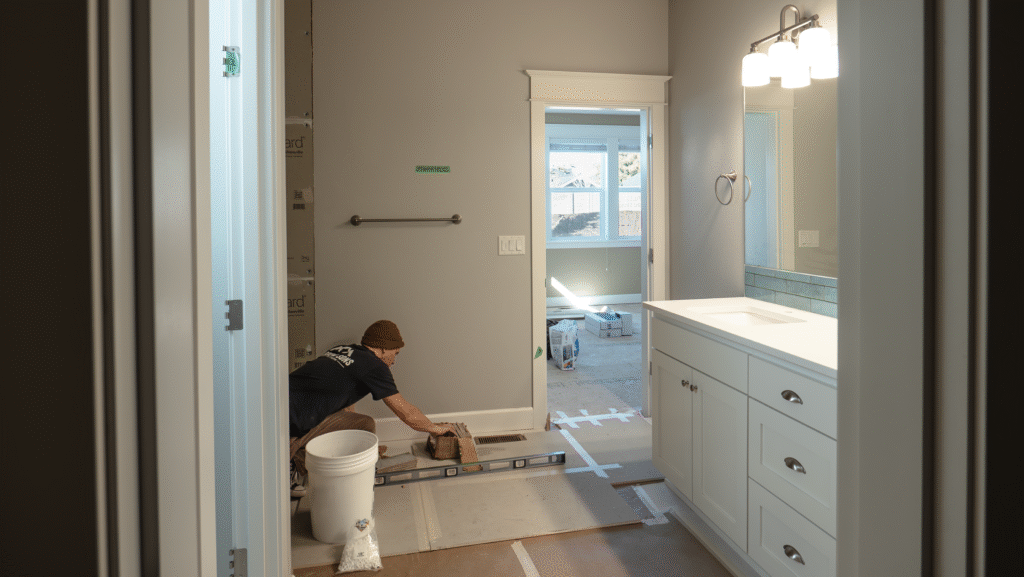
Managing construction tolerances in remodeling demands far more than textbook knowledge or standardized procedures. It requires a practiced understanding of how building materials respond once they are exposed to real site conditions. Timber may subtly shift depending on moisture levels, manufactured components can vary slightly between batches, and concrete elements often settle in ways that are not fully predictable. Harris & Sons rely on professionals who have spent years learning how to interpret these behaviors in real time, allowing them to make informed adjustments without disrupting the integrity of the overall design.
While digital measuring systems and modern layout tools provide valuable reference points, they do not replace human interpretation when unexpected variations appear. A structure rarely behaves exactly as drawn, which means decisions often need to be made directly on-site. Experienced builders recognize when a slight deviation is acceptable and when correction is required. Harris & Sons combine advanced measuring tools with seasoned judgment, ensuring that technical readings and real-world conditions are always balanced before moving forward.
Coordination across different trades also plays a significant role in maintaining consistency throughout a project. Framing, electrical work, plumbing installations, and finishing stages all depend on one another, and even minor miscommunication can create cascading alignment issues later. Harris & Sons maintain structured communication between teams so that each phase follows a unified plan. This reduces misalignment risks and ensures that all components integrate smoothly as the build progresses.
Sequencing further influences how well tolerances are preserved. The order in which tasks are completed determines how materials settle and how interfaces between systems behave. For example, installing finishes too early can restrict necessary adjustments in structural elements, while poorly timed framing corrections can affect cabinetry or flooring alignment. Harris & Sons structure each phase carefully so that foundational work supports subsequent installations without forcing corrective adjustments later.
When these elements—field experience, communication, and sequencing—work together, the outcome is a structure that feels naturally aligned and dependable. There is no visible correction work or awkward adjustment because the entire process was managed with foresight from the beginning. Harris & Sons treat this coordination as a defining part of their craftsmanship approach, ensuring that results remain consistent across all project scales.
A Harris & Sons Project Example
In a recent residential renovation handled by Harris & Sons, the homeowners requested a kitchen design focused on uninterrupted surfaces, concealed appliances, and a clean architectural rhythm. At first glance, the scope appeared straightforward, but once demolition began, subtle inconsistencies within the original framing became apparent. These irregularities were typical of older construction, yet they posed a challenge for achieving the refined finish the clients envisioned.
Before moving into installation, Harris & Sons paused the process to reassess the structural baseline. The team corrected uneven framing sections, stabilized key support points, and recalibrated wall alignments to ensure a consistent foundation. This preparatory stage was essential because even slight deviations would have been visible once cabinetry and integrated fittings were installed. By addressing these conditions early, they eliminated potential complications during finishing work.
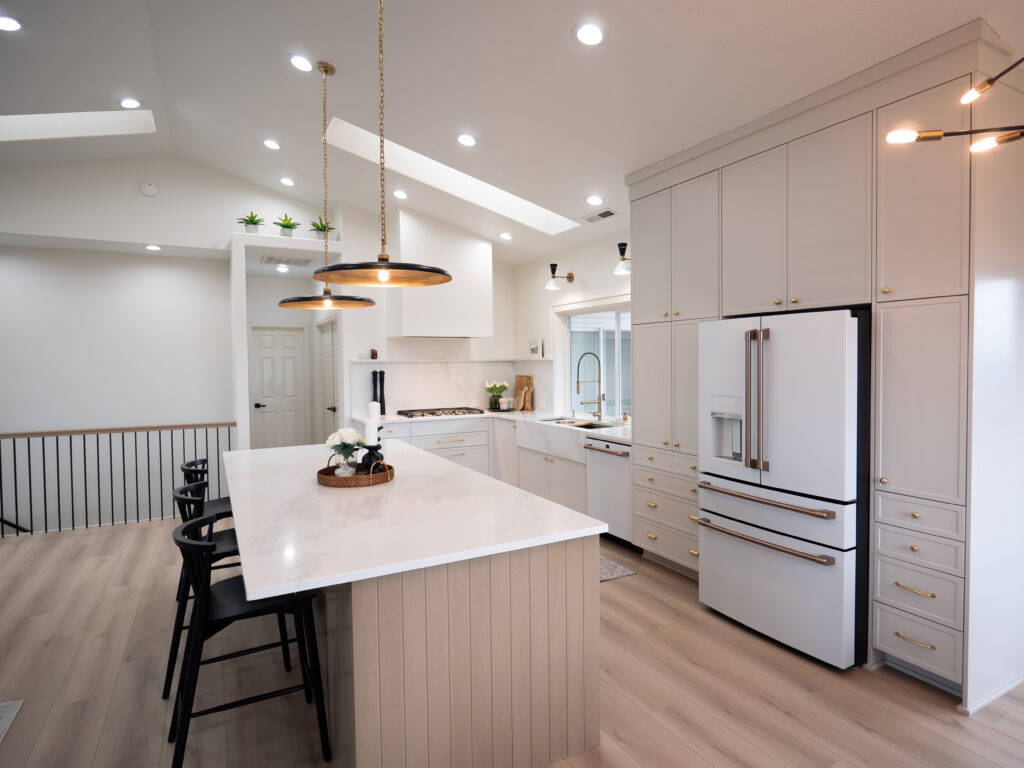
As construction advanced, the benefits of this groundwork became increasingly evident. Cabinetry lined up cleanly, appliance integration appeared seamless, and surface transitions maintained consistent spacing throughout the room. The finished kitchen carried a sense of continuity that would have been impossible without the earlier adjustments. What appeared to be effortless design was actually the result of careful structural correction completed before visible work began.
Once the project was finalized, the space conveyed a refined and cohesive character. Homeowners often described the kitchen as “naturally balanced,” unaware of the underlying adjustments that made that impression possible. This outcome reflects a consistent pattern in Harris & Sons projects, where unseen structural refinement supports the visible quality of the finished environment.
The project demonstrates a core principle in their work: surface-level appearance is only as strong as the framework beneath it. Harris & Sons consistently prioritize foundational alignment before aesthetic execution, ensuring that the final result remains stable and visually consistent over time.
Long-Term Value of Proper Tolerance Management
Well-managed construction tolerances in remodeling contribute significantly to the long-term reliability of a home. When components are installed within appropriate margins, they experience reduced strain as the building naturally responds to environmental changes such as humidity shifts or seasonal temperature variation. This prevents premature distortion, separation, or mechanical stress across connected materials. Harris & Sons incorporate this understanding into every phase of their work, ensuring that each element performs reliably beyond initial completion.
Ongoing maintenance requirements are also minimized when installations are carried out with controlled alignment. Misaligned doors, uneven flooring, and inconsistent trim lines are often symptoms of overlooked deviations during construction. These issues may not be immediately visible but tend to emerge gradually with regular use. Harris & Sons reduce these risks by ensuring that each element is positioned correctly from the outset, avoiding the need for corrective intervention later in the building’s lifecycle.
From a financial perspective, structural consistency also enhances long-term property value. Homes that exhibit balanced alignment and cohesive detailing are often perceived as higher quality by potential buyers, even if they cannot identify the technical reasoning behind it. Harris & Sons achieve this level of refinement through disciplined execution, ensuring that their projects maintain appeal in competitive real estate environments.
Energy efficiency is another area influenced by construction alignment. Gaps or uneven interfaces within a building envelope can lead to thermal inefficiencies and airflow inconsistencies. Properly managed tolerances help maintain tight seals and consistent insulation performance. According to ENERGY STAR guidelines, well-executed construction practices directly contribute to improved energy conservation. Harris & Sons integrate these principles into their builds to support both structural durability and environmental efficiency.
Over time, these combined factors result in a home that remains stable, efficient, and visually coherent. Rather than requiring frequent correction or adjustment, the structure maintains its integrity through careful initial execution. Harris & Sons prioritize this long-term performance perspective in every project, ensuring lasting value beyond completion.
Conclusion: Precision Shapes the Final Result
Construction tolerances in remodeling play a defining role in how a finished space ultimately performs, even though they remain largely invisible once the project is complete. These controlled variations determine how well individual components interact, how surfaces align, and how stable the structure feels over time. When properly managed, they create interiors that feel naturally cohesive and structurally dependable. Harris & Sons treat this aspect of construction as a fundamental requirement rather than a secondary concern.
By addressing potential inconsistencies early in the process, they reduce the likelihood of misalignment, unnecessary adjustments, or structural irregularities later on. This forward-thinking approach allows each stage of construction to build seamlessly on the one before it. Instead of relying on corrective work at later phases, Harris & Sons ensure that foundational conditions support every finishing detail from the beginning.
A successful renovation is ultimately defined not just by its appearance but by the stability and consistency behind it. When tolerances are carefully controlled, doors function smoothly, surfaces align naturally, and transitions between materials feel intentional. These subtle qualities shape how a home is experienced every day, even if they are not immediately noticed.
For homeowners planning a renovation, understanding the role of tolerances provides a clearer sense of what defines true quality in construction. It highlights why some projects feel effortlessly refined while others appear slightly uneven despite similar design choices. Harris & Sons consistently deliver results built on this principle, ensuring that every project reflects both visual clarity and structural reliability for years to come.
