
Introduction: Why “Custom” Has Become a Misused Idea in Remodeling
custom remodel vs cookie cutter homes is a concept that increasingly defines how homeowners evaluate renovation quality today. Rather than focusing solely on finishes or surface aesthetics, people are beginning to understand the deeper difference between personalized construction and standardized design approaches. Harris & Sons often highlights that what separates these two outcomes is not budget alone, but the level of intention behind every design decision. A true custom remodel responds to how people live, not just how spaces are expected to look. Cookie-cutter homes, on the other hand, tend to rely on repeatable templates that prioritize efficiency over individuality. This distinction has become more visible as homeowners seek spaces that feel aligned with their daily routines. In practice, the difference shows up in flow, functionality, and long-term satisfaction rather than immediate visual impact.
In many modern renovations, personalization is mistakenly equated with aesthetic variety. Homeowners are often presented with options such as premium fixtures, expanded kitchens, or trending materials, but these choices still sit within a predefined framework. As a result, even expensive remodels can begin to resemble one another. Harris & Sons challenges this pattern by analyzing how each property behaves as a unique environment shaped by its occupants, rather than forcing it into familiar design categories.
A truly custom home is not defined at the moment of installation but in the way it responds to everyday living over time. This includes how people move through rooms, how light interacts with interior surfaces throughout the day, and how spaces support both routine and change. These details are not always visible in early renderings, yet they ultimately determine whether a home feels natural or constructed. Harris & Sons builds with this long-view perspective, ensuring that individuality is embedded into the architecture itself.
The difference between a standard renovation and a meaningful transformation often reveals itself only after the home has been lived in. One focuses on visible enhancement, while the other reshapes the relationship between people and their environment. Over time, this distinction becomes unmistakable, influencing not just appearance but overall comfort and usability.
Design That Starts With People, Not Templates in a Custom Remodel vs Cookie Cutter Homes
A remodel begins to feel genuinely custom when it is shaped by human behavior rather than pre-existing design templates. Many conventional projects rely on established layouts that are adjusted only slightly to accommodate measurements or stylistic preferences. While efficient, this method often produces environments that feel familiar rather than personal. Harris & Sons takes a different approach by studying how individuals and families interact with their homes on a daily basis before any design direction is finalized.
Instead of beginning with mood boards or aesthetic references, their process prioritizes observation. They look at how movement flows between spaces, where natural gathering points occur, and how privacy needs shift throughout the day. These behavioral patterns are far more influential than surface preferences when determining how a home should be structured. Harris & Sons uses this insight to shape layouts that feel intuitive rather than imposed. The difference between a custom remodel vs cookie cutter homes becomes clearer when examining how design decisions are made in the early planning phase. Homes that follow standardized templates often prioritize layout efficiency over personal behavior patterns, which can limit how naturally a space supports daily life. Harris & Sons approaches this differently by building each design around the specific routines of the homeowner rather than relying on recycled configurations.
Even within a single household, needs can vary significantly. One area of the home may require openness and connection, while another demands quiet separation for focus or rest. These differences cannot be solved through standardized planning alone. They require a design approach that adapts to lifestyle nuance. Harris & Sons integrates these distinctions early in development, ensuring that each space reflects its intended function without forcing uniformity across the entire layout.
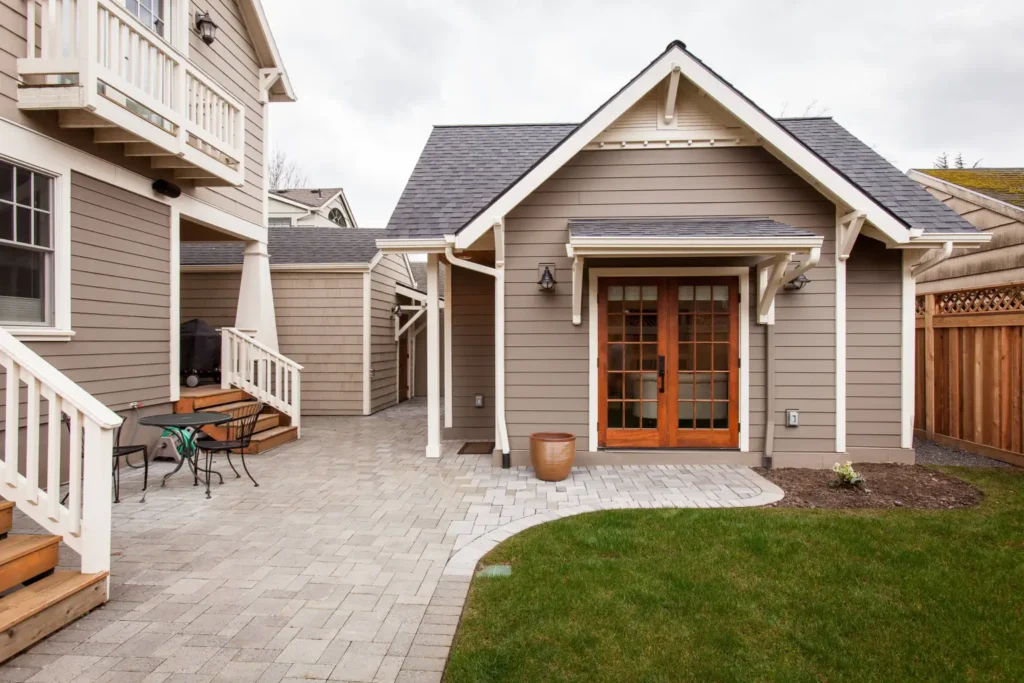
Aesthetics still play a role in this process, but they are not the foundation of decision-making. Instead, visual direction is layered onto a structure that already supports functional clarity. This prevents the common issue where homes look visually refined but fail to align with how people actually live within them. When design is rooted in behavior, repetition naturally disappears because no two households function in exactly the same way.
Material Selection That Reflects Identity, Not Trends
Material selection is one of the clearest indicators of whether a home has been thoughtfully customized or assembled from predictable choices. In many renovations, finishes are selected based on current popularity or showroom trends, which often leads to interiors that feel visually interchangeable. Harris & Sons avoids this pattern by treating materials as expressive components that contribute to both atmosphere and identity.
Rather than focusing solely on appearance, each material is evaluated for how it responds to light, texture, temperature, and long-term wear. Natural stone with subtle variation, hand-finished wood elements, and carefully selected metals often appear in their projects because they introduce depth that cannot be replicated through mass production. These choices create subtle distinctions that make each home feel distinct without relying on excessive ornamentation.
Long-term behavior is also a key consideration. Materials evolve over time, developing patina, tonal shifts, or surface character depending on usage and environment. Harris & Sons intentionally selects materials that age in a way that enhances rather than diminishes the overall design. This approach ensures that homes continue to develop personality long after construction is complete.
For broader context on responsible material planning and environmental performance, the U.S. Environmental Protection Agency provides guidance on sustainable building practices. These principles align with the way Harris & Sons evaluates durability and lifecycle impact during selection.
Ultimately, material identity is not about luxury or cost but about coherence. When every surface feels intentionally chosen to support the design narrative, the home gains a sense of depth that cannot be achieved through standardized selections.
Craftsmanship That Defines the Final Outcome
Even the most thoughtful architectural concept can lose its individuality if execution lacks refinement. Craftsmanship is where design intent becomes physically real, and where customization is either reinforced or weakened. Harris & Sons places strong emphasis on skilled execution, ensuring that every joint, transition, and alignment reflects continuity and care.
In many production-driven builds, minor inconsistencies are often overlooked because they are considered unavoidable. Over time, however, these small deviations accumulate and affect how cohesive the home feels. Harris & Sons approaches these details differently, treating even slight misalignments as meaningful enough to address before completion. This mindset helps maintain visual and structural consistency across the entire project.
Construction conditions rarely unfold exactly as planned, particularly in older homes where hidden irregularities may surface once work begins. Instead of forcing a rigid approach, Harris & Sons adapts in real time, making adjustments that preserve both design intent and structural stability. This flexibility ensures that the final result remains aligned with the original vision despite on-site challenges.
Standards for construction quality and safety are outlined by organizations such as the International Code Council, which establish important benchmarks for professional building practices. Harris & Sons incorporates these standards while still allowing room for design interpretation and site-specific decision-making. In evaluating a custom remodel vs cookie cutter homes, material selection plays a defining role in how individuality is expressed. Generic renovations tend to rely on widely available finishes, which can make multiple homes feel visually similar despite different layouts. Harris & Sons avoids this repetition by selecting materials that respond uniquely to light, texture, and long-term use.
When craftsmanship is executed with consistency and awareness, the result is a home that feels seamless rather than assembled. There are no visible corrections or awkward transitions—only a continuous expression of the original design intent.
Spatial Flow and How Homes Actually Feel to Live In
A home becomes truly custom not just through appearance, but through the way it supports movement and daily rhythm. Spatial flow determines whether a space feels intuitive or fragmented, and this aspect is often overlooked in template-based design approaches. Harris & Sons places strong emphasis on understanding how people move through their homes before finalizing layout decisions.
Standard layouts frequently prioritize symmetry or visual balance, but these priorities do not always align with real-life usability. A space may look organized on paper yet feel restrictive when occupied. Harris & Sons addresses this disconnect by designing circulation paths that reflect actual behavior rather than theoretical arrangement.
Environmental factors such as natural light exposure, airflow patterns, and acoustic behavior also influence how a space is experienced. These elements are integrated early in the design phase rather than adjusted afterward, ensuring that comfort is embedded into the structure itself. This results in homes that feel more natural to inhabit. Another clear distinction in a custom remodel vs cookie cutter homes lies in how movement is structured within the space. Cookie-cutter designs often rely on predictable circulation paths that may not align with how people actually live in their homes. Harris & Sons studies movement patterns carefully to ensure that transitions between rooms feel intuitive rather than forced.
Insights from ENERGY STAR highlight how design decisions impact efficiency and comfort. Harris & Sons applies similar principles to ensure that spatial organization supports both functional performance and daily livability.
When spatial flow is carefully considered, a home feels effortless to navigate. This sense of ease is one of the clearest indicators that a space has been designed specifically for its occupants.
A Harris & Sons Project Example: When Detail Defined the Entire Outcome
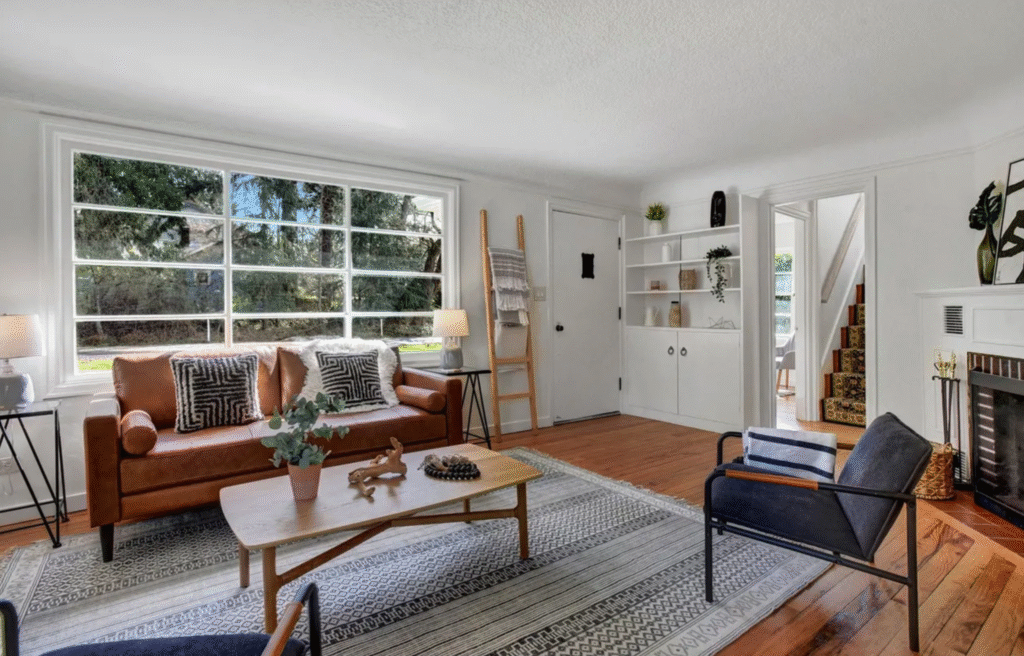
In one residential project, Harris & Sons were tasked with transforming a standard home into a highly personalized living environment. The initial structure followed a conventional layout, with predictable room divisions and limited spatial flexibility. The homeowners wanted something more fluid and tailored to their lifestyle.
During early evaluation, Harris & Sons identified opportunities to rework circulation patterns and improve spatial relationships between key areas. Rather than simply expanding square footage, the team restructured internal flow to create a more natural connection between living zones. This allowed the home to function more intuitively without altering its overall footprint significantly.
Material selection also played a critical role in differentiating the final outcome. Instead of relying on standard finishes, the team introduced subtle variations in texture and tone to give each area its own character while maintaining cohesion across the entire space. These decisions contributed to a sense of individuality that could not be achieved through layout alone.
By the end of the project, the home felt entirely redefined—not because of dramatic expansion, but because of thoughtful restructuring. Every detail contributed to a sense of identity that reflected the homeowners rather than a preset design model.
This project reflects how Harris & Sons consistently approach remodeling: not as replication, but as interpretation.
Conclusion: Custom Design Is Built Through Decisions, Not Decoration
A remodel feels genuinely custom when every decision contributes to how the home functions, not just how it appears. It is the result of thoughtful planning, careful observation, and consistent execution rather than decorative upgrades or trend-driven styling. Harris & Sons consistently reinforces this principle across their projects, ensuring that each home is shaped by intention rather than imitation.
When structure, materials, craftsmanship, and spatial organization work together, the result is a home that feels naturally aligned with the people who live in it. There is no sense of repetition or borrowed identity because the design emerges from specific conditions rather than standardized models. This is what allows true customization to exist beyond marketing language.
Over time, the difference becomes even more apparent. Homes built with thoughtful consideration continue to feel relevant and functional long after completion, adapting smoothly as lifestyles evolve. In contrast, generic renovations often begin to feel disconnected as needs change. Harris & Sons prioritizes this long-term adaptability in every project they undertake.
Ultimately, the difference between a custom remodel vs cookie cutter homes is not measured by surface finishes or square footage, but by how deeply the design responds to the people living within it. For homeowners seeking more than visual improvement, true customization lies in this deeper level of design thinking. Harris & Sons continue to build spaces that reflect real life in its complexity, ensuring that every home is not just designed, but genuinely understood.
